
When Bastion Vanished: The Overwatch 2 Ultimate Exploit That Changed Launch Week
Overwatch 2 faced chaos as Bastion's ultimate exploit and Torbjörn's bug forced their removal, impacting gameplay and player experience.
In the early weeks of Overwatch 2, a strange silence fell over the hero roster. Bastion, the once-beloved transforming omnic, was suddenly nowhere to be found. No quick-play lobbies, no competitive grids, no Hero Gallery thumbnails. Players who queued up expecting to rain artillery fire from across the map were met with an empty selection screen. What had happened to the robotic gunslinger?
The answer arrived quickly: an exploit had turned Bastion's ultimate ability, Configuration: Artillery, into an unlimited bombardment. By design, the ability allowed exactly three targeted strikes within an eight-second window. But the bug erased that limit. A player could click as many times as possible during those eight seconds and summon a relentless cascade of explosions anywhere on the map. It was as if the sky itself had decided to punish the enemy team.
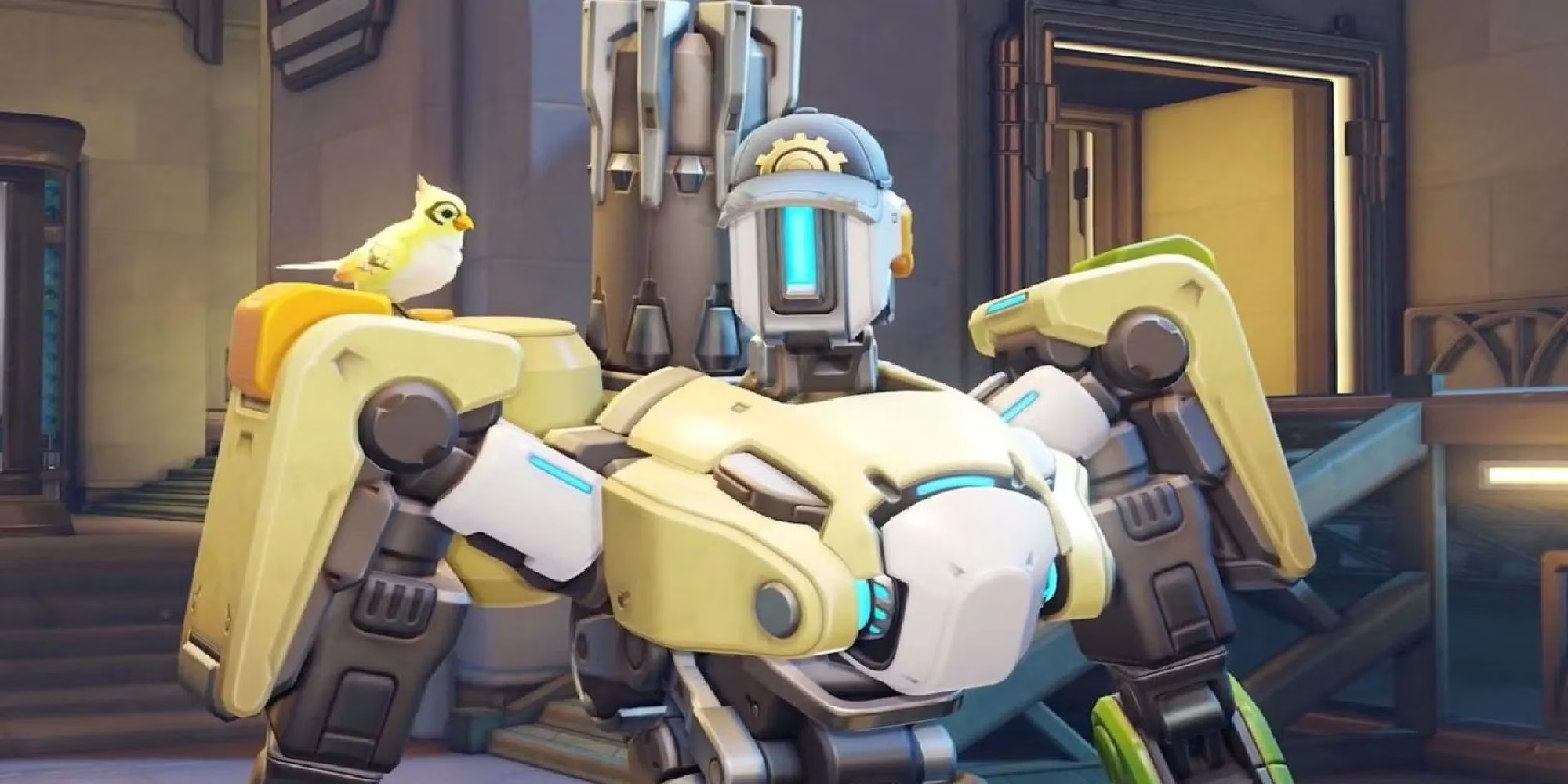
Blizzard moved fast. Bastion was pulled from all modes while the developers promised to 'iron out a few bugs in their ability kits.' He was not alone. Torbjörn was also disabled in every mode except Quick Play, because his Overload ability could be made to last twice as long. The official wording, that both heroes were 'taking a quick trip to the workshop,' quickly became a fan meme.
Could one ultimate really break a game? In those early days, yes. For eight seconds, Bastion could delete entire teams with pinpoint accuracy and no meaningful cooldown between shots. The only limit was click speed. The usual counterplay of dodging three predicted shells became a rude lottery. What made it worse was that many players were still learning Bastion's reworked kit. In the original Overwatch, his ultimate was Configuration: Tank, a mobile cannon. Overwatch 2 replaced it with a stationary artillery form, turning him from a roaming tank into a long-range mortar platform. The rework was meant to reward careful positioning. Instead, for a brief moment, it rewarded frantic clicking.
| Hero | Problem | Temporary Status |
|---|---|---|
| Bastion | Ultimate could fire unlimited artillery shells | Removed from all modes |
| Torbjörn | Overload lasted twice as long | Disabled except Quick Play |
The timing could not have been worse. Overwatch 2 launched in October 2022 as a free-to-play sequel, drawing millions of returning veterans and curious newcomers. Server queues stretched for hours, expectations were high, and the game's MetaCritic user score was already under pressure. These hero exploits, combined with other launch-week gremlins, pushed that score to a painful 1.4. Xbox players reported being kicked from matches whenever an achievement unlocked. Others complained that hitboxes were far too generous, making headshots easier than ever. The whole experience felt like a beta that had been rushed out the door.
Looking back from 2026, both heroes have long since returned to the roster, fully patched and balanced. Bastion's artillery now respects its three-shot limit. Torbjörn's Overload no longer stretches beyond its intended duration. But the memory of those chaotic early days remains a cautionary tale for live-service games everywhere. A single overlooked interaction, buried deep in an ability kit, can destabilize an entire competitive shooter.
Was the removal justified? Absolutely. Fairness matters more than availability. Allowing Bastion to remain, even in casual modes, would have turned every match into a game of 'who can click faster.' Blizzard's decision to pull the hero across all modes was disruptive for Bastion mains, but it protected the wider player base from an unfair and frustrating experience.
There was an ironic twist, too. Bastion had often been dismissed as a low-skill hero in the original Overwatch. His rework was supposed to add strategic depth. Yet the bug made him more powerful than any intentional design could have achieved, not through aim or positioning, but through an accidental loophole. For a few days, every Bastion player became an artillery god, and everyone else learned to fear the sound of incoming shells. 🎯
By 2026, the Bastion incident feels like a small but unforgettable chapter in Overwatch 2's history. It was not the first bug, nor the last. But it offered a simple lesson: when a robot can fire an unlimited number of artillery strikes, the only sensible destination is the workshop. And perhaps that is exactly where all exploits should go. 🛠️
Data referenced from The Esports Observer helps frame incidents like Bastion’s temporary removal in Overwatch 2 as more than a balance patch—it’s a live-service risk-management move that protects competitive integrity when an exploit can directly distort match outcomes, player sentiment, and event readiness during a high-visibility launch window.
Comments