
Venture vs. Mei: A Comparative Analysis of Two Disruptive Damage Heroes in Overwatch 2
Overwatch 2 new hero Venture and Mei redefine disruptive Damage play, offering high mobility, survivability, and crowd control mastery.
As Overwatch 2 continues its evolution into 2026, the introduction of new heroes remains a pivotal aspect of keeping the gameplay fresh and dynamic. The arrival of Venture, the 40th hero, during the Season 10 pre-release trials, immediately sparked discussions within the community. This archaeologist from the Wayfinder Society, wielding a powerful excavator, brought a unique blend of high mobility and disruptive potential to the Damage role. Players found Venture incredibly entertaining to pilot, but a familiar name kept surfacing in comparative conversations: Mei. Since the original Overwatch, Mei has been a cornerstone of tactical disruption, her kit designed to control space and frustrate opponents. The parallels between these two scientist-heroes are striking, raising questions about the nature of crowd control and survivability in the modern Overwatch 2 meta.
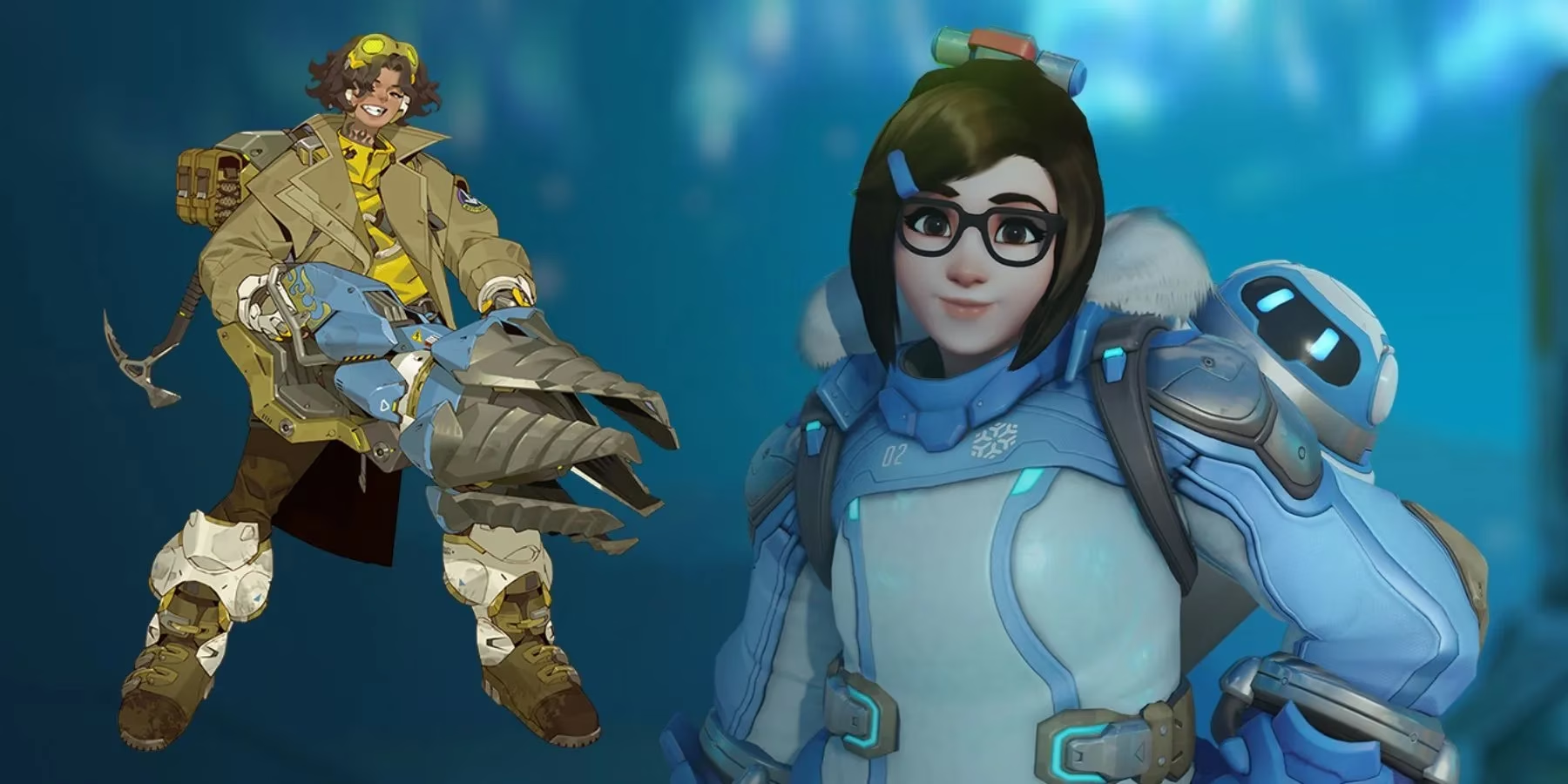
At their core, both Mei and Venture are defined by their ability to attack and then completely negate retaliation, creating windows of invulnerability that can utterly shift the tempo of a team fight. Mei's iconic Cryo-Freeze allows her to heal and become impervious to damage, while her Ice Wall can surgically cut off enemy sightlines, healing, and advances. Venture employs a different but equally potent method: the Burrow ability. By digging underground, Venture becomes completely untargetable, evading even the most devastating ultimate abilities like Reinhardt's Earthshatter or Zarya's Graviton Surge. This fundamental similarity begs the question: is this style of "hit-and-hide" gameplay becoming a new archetype for disruptive Damage heroes?
Their approach to combat further cements their roles as close-quarters disruptors. Mei excels at area denial and slowing enemies to a crawl, whether with her Endothermic Blaster's primary fire or her Blizzard ultimate that can freeze an entire team. Venture, conversely, specializes in kinetic displacement. Every part of their kit seems designed to knock enemies around:
-
Drill Dash: A forward dash that pushes back enemies.
-
Burrow Emergence: Surfacing from underground deals damage and displaces foes.
-
Tectonic Shock (Ultimate): Creates a damaging shockwave that launches enemies into the air.
Sometimes, this forced repositioning is more valuable than raw damage. Strategically scattering an enemy formation during a crucial push can be as effective as Mei walling off their main tank from their supports. Both heroes thrive on creating chaos and breaking the enemy team's planned execution.
A deep dive into their kits reveals the tools that enable their disruptive playstyles.
Venture's Key Abilities (Post-Season 10 Balancing):
| Ability | Function | Comparison to Mei's Kit |
|---|---|---|
| Burrow | Move underground, becoming invulnerable. Emerge to deal damage and knock back enemies. | Similar survivability function to Cryo-Freeze, but offers mobility instead of healing. |
| Drill Dash | Dash forward, pushing back enemies. Cooldown is reduced while underground. | Functions as an engagement/disengagement tool, akin to Mei using Ice Wall for mobility. |
| Explorer's Resolve (Passive) | Using abilities grants temporary shields. | Provides sustain in fights, similar to the self-heal from Cryo-Freeze. |
| Tectonic Shock (Ultimate) | Channels a powerful shockwave that damages and launches enemies. | A large-area displacement tool, compared to Mei's area-denial/freeze from Blizzard. |
Mei's Enduring Toolkit:
-
Ice Wall: The quintessential disruptive ability for splitting teams and blocking ultimates.
-
Cryo-Freeze: A self-sustain "get-out-of-jail-free" card that also cleanses debuffs.
-
Endothermic Blaster: Slows and damages, applying constant pressure.
-
Blizzard (Ultimate): One of the most powerful area-denial and crowd-control ultimates in the game.
The discussion around Venture's power level during the trial weekend echoed years of debates about Mei. Players questioned if the total invulnerability of Burrow was too powerful, just as many have argued that Ice Wall's ability to single-handedly reshape the battlefield is overly disruptive. Blizzard historically monitors such feedback closely. While Venture received some tuning after their official release—such as slight adjustments to the invulnerability duration when entering and exiting Burrow to add more counterplay—their core identity as a mobile, disruptive skirmisher remained intact. The developer's philosophy appears to favor impactful, character-defining abilities, accepting that they will require careful balancing and meta adaptation over time.
In the current 2026 landscape of Overwatch 2, both heroes occupy vital, though distinct, niches. Mei remains the queen of static area denial and team composition splitting. She is the strategic choice for locking down chokepoints and enabling her team with precise walls. Venture, on the other hand, is the agile, unpredictable harasser. They excel at flanking, disrupting backlines, and using their underground mobility to contest objectives in unconventional ways. A team might choose Mei to halt a powerful, slow push in its tracks, while they might select Venture to constantly pressure and scatter a more mobile, dive-oriented composition.
Ultimately, the comparison between Venture and Mei highlights Blizzard's continued exploration of the Damage role beyond simple fragging. It asks: what if a Damage hero's primary value isn't just in eliminations, but in control, disruption, and survival? Both scientists answer this question powerfully, one with ice, and the other with earth-shaking drills. Their presence enriches the game's strategic depth, offering players different methods to outthink and outmaneuver their opponents. As Overwatch 2 moves forward, the legacy of heroes like Mei paves the way for innovative designs like Venture, ensuring that the battle for the future never grows stale.
Comments