
Two Years Later, Juno Remains My Favorite Support Over Lucio in Overwatch 2
Overwatch 2's Juno support hero evolves Lucio's mobile playstyle in 2026 with precise Mediblaster bursts and weightless Glide Boost escapes.
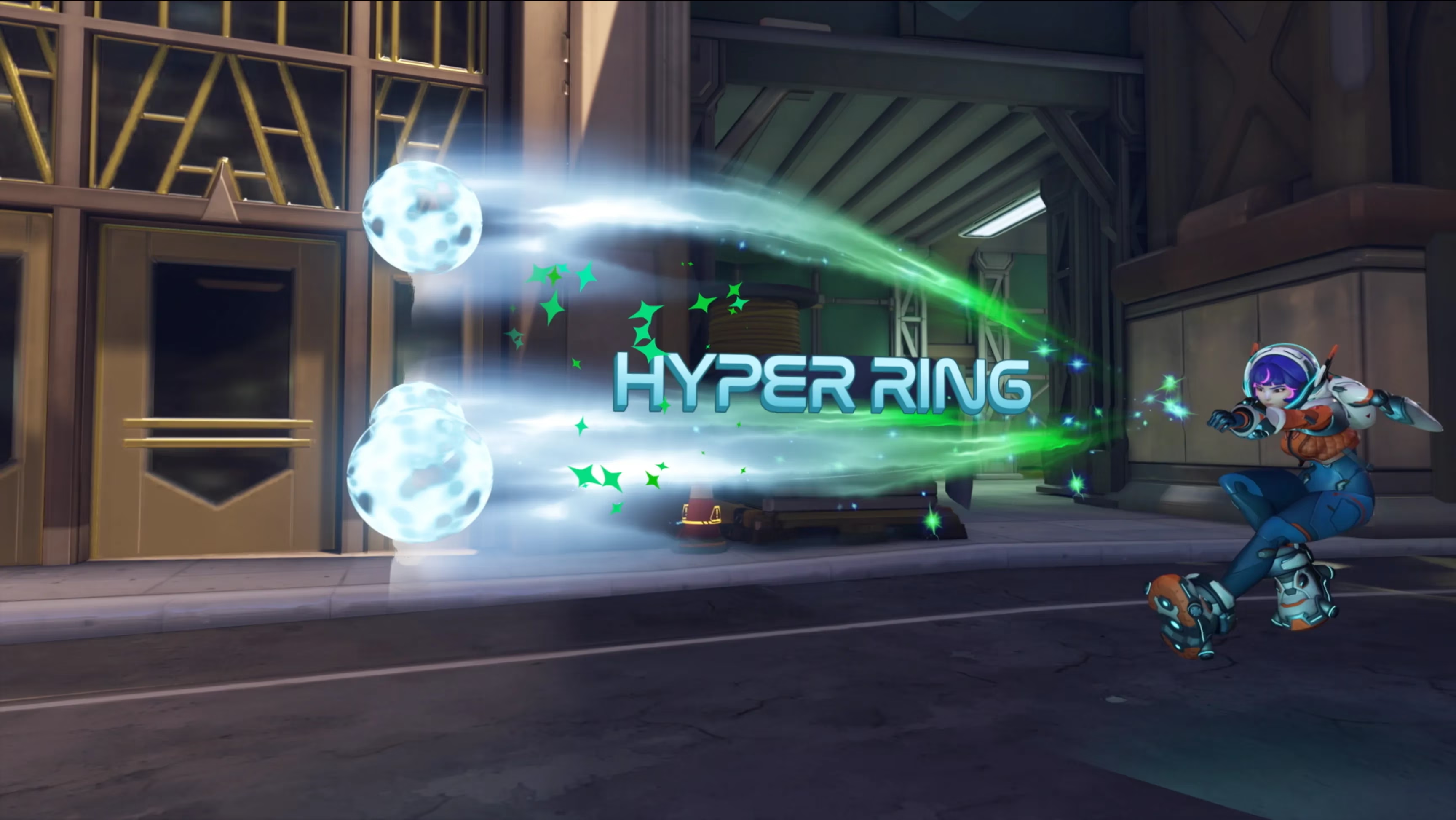
In 2026, Overwatch 2 has become my hero shooter of choice once again. I finished this season's battle pass and now find myself chipping away at optional challenges and cosmetic bits until the next support hero arrives, but my attention still orbits around Juno. It is not only because she is a cute astronaut who kicked Venture in the face during her reveal trailer, although that remains a satisfying piece of personality. She became my main for the same reason I originally fell for Lucio: speed, mobility, aggressive support, and the feeling that I can drag a team through a messy teamfight.
For years, I played Lucio out of obligation rather than enjoyment. I wanted to win, and support players are often expected to pick heroes that slot neatly into compositions. Playing Lucio felt like being a metronome bolted to a treadmill—always moving, always useful, but slowly sanding away the fun. Juno changed that. She arrived like a small comet cutting through the gravity of my usual support rotations, close enough to Lucio in style to feel familiar, but different enough that I no longer felt pigeonholed.
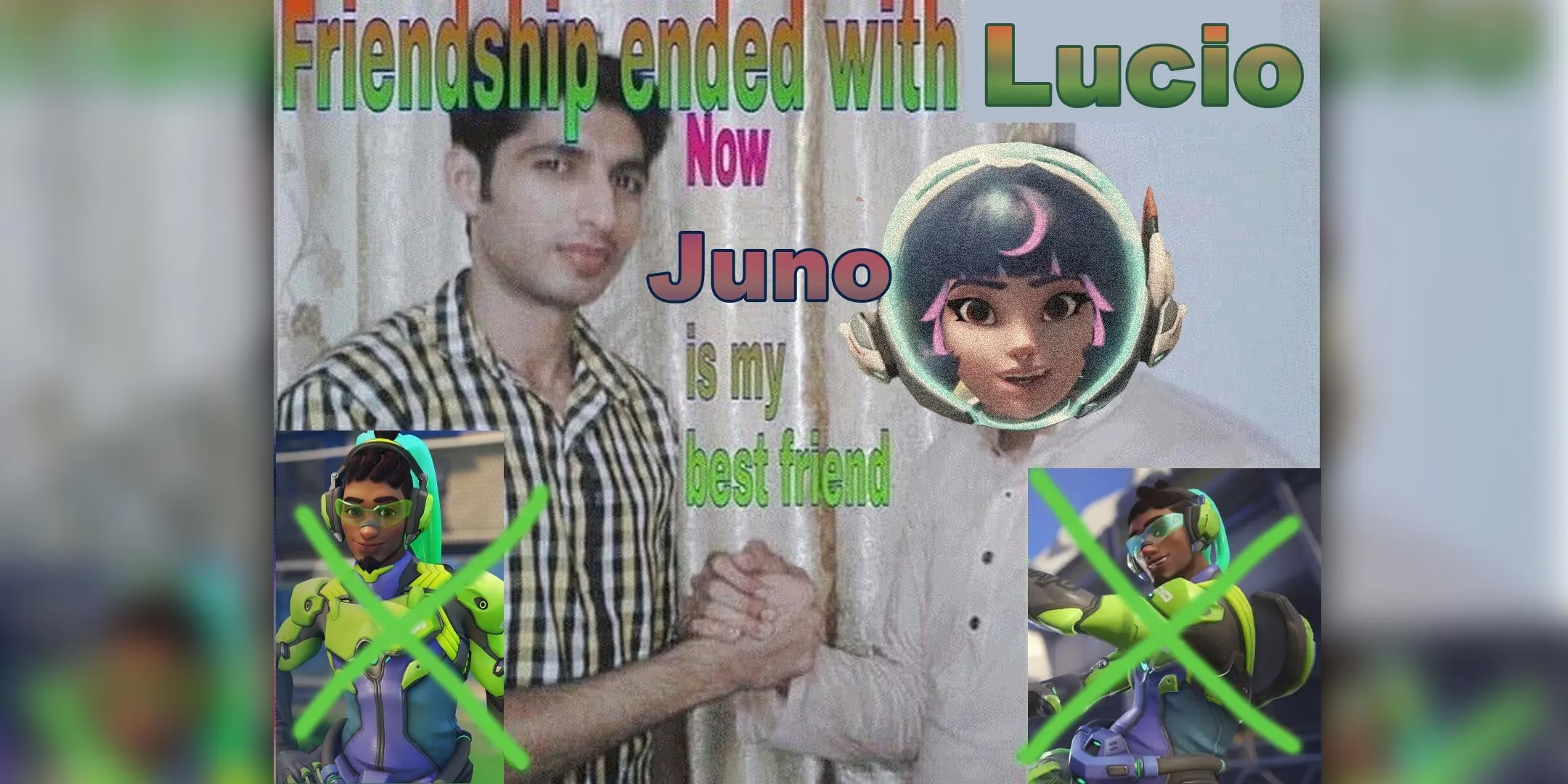
Now in 2026, after multiple seasons of balance changes, Juno still holds her own. The weekend playtest back then made me think she might be the strongest support since Ana, and while she has been tuned, the core promise remains intact. She is not just a Lucio clone; she is the evolution of that playstyle.
🚀 Mediblaster: Precise Support Rather Than Passive Healing
Juno's Mediblaster remains the first clue that she asks more of your aim than Lucio ever did. It heals allies and damages enemies, but instead of a continuous stream, it is a swift burst-fire weapon. That means I cannot simply point my reticle in a general direction and hope for the best. I have to track, lead my shots, and switch between healing and damage with more deliberate timing.
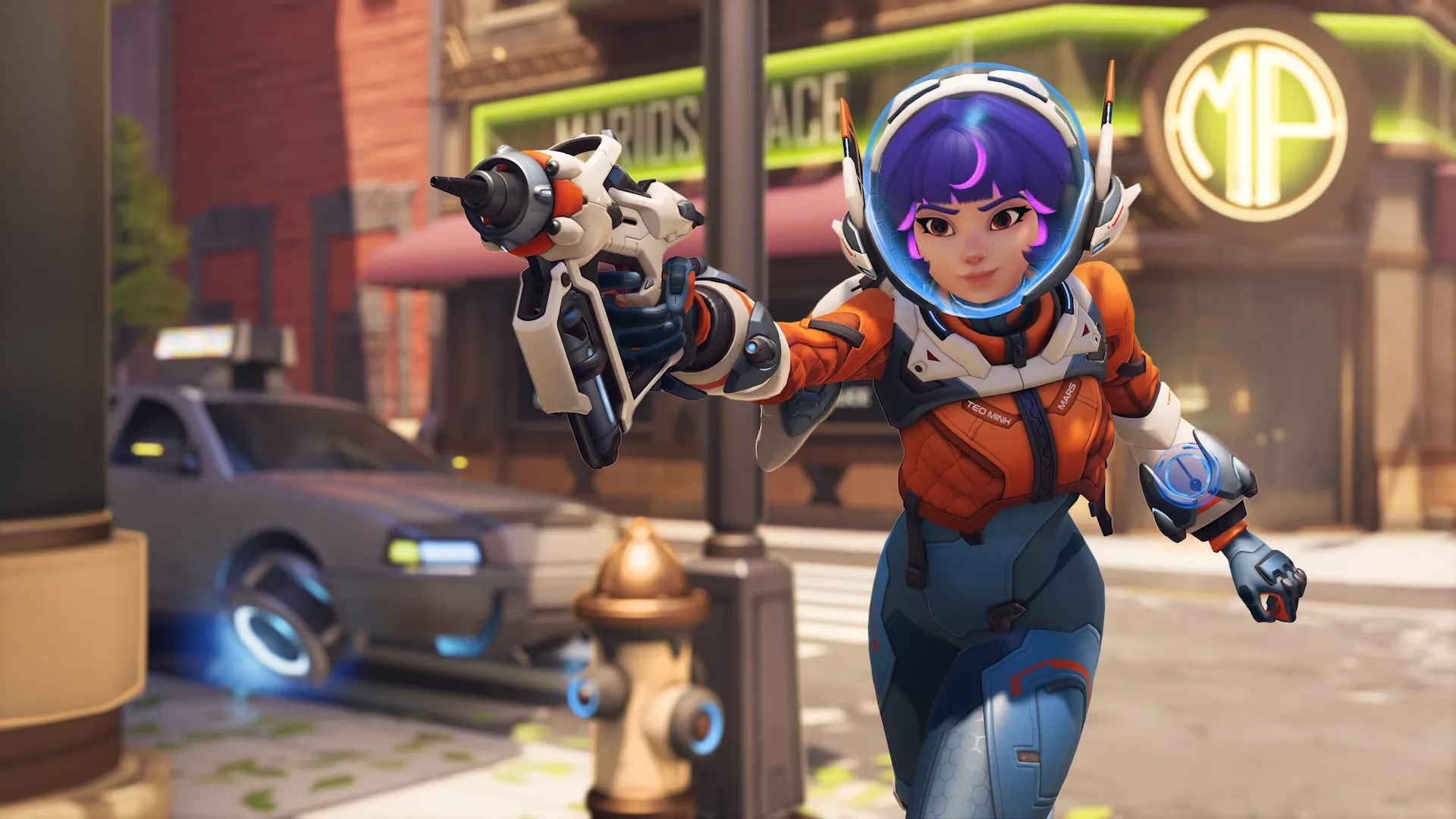
Lucio's healing was more passive, like a warm current circling the team, while Juno's Mediblaster feels closer to stitching wounds with needle-thin bursts of light. In the middle of a fight, that distinction matters. She can hold her own in a duel, but she will not last long without a tank or nearby allies, so positioning always feels like a conversation with the rest of the squad.
🌌 Glide Boost: An Escape That Feels Weightless
Glide Boost is the ability that helped me break the Lucio habit. It lets Juno launch into the air with a jetpack, similar to Mercy, but with an astronaut's flat, practical trajectory. I use it to escape flanks, contest high ground, or simply get a better angle on a chaotic fight.
Where Lucio could wall-ride and speed away, Juno's vertical burst feels less like parkour and more like being slingshotted out of the trenches. This is the second metaphor that sticks with me: Lucio's movement was a river running along walls, but Juno's Glide Boost is a firework leaving the ground on purpose.
💫 Pulsar Torpedoes and Hyper Ring: Utility That Turns a Fight
Pulsar Torpedoes is still the ability that shocked me the most during that early playtest. It sends out a number of homing missiles that can lock onto multiple targets in range, healing allies and damaging enemies in one volley. In the right circumstances, it can swing a stalled payload or clear space before a push. It feels like throwing a flock of trained birds into a storm—each one finds a target while you focus on moving.
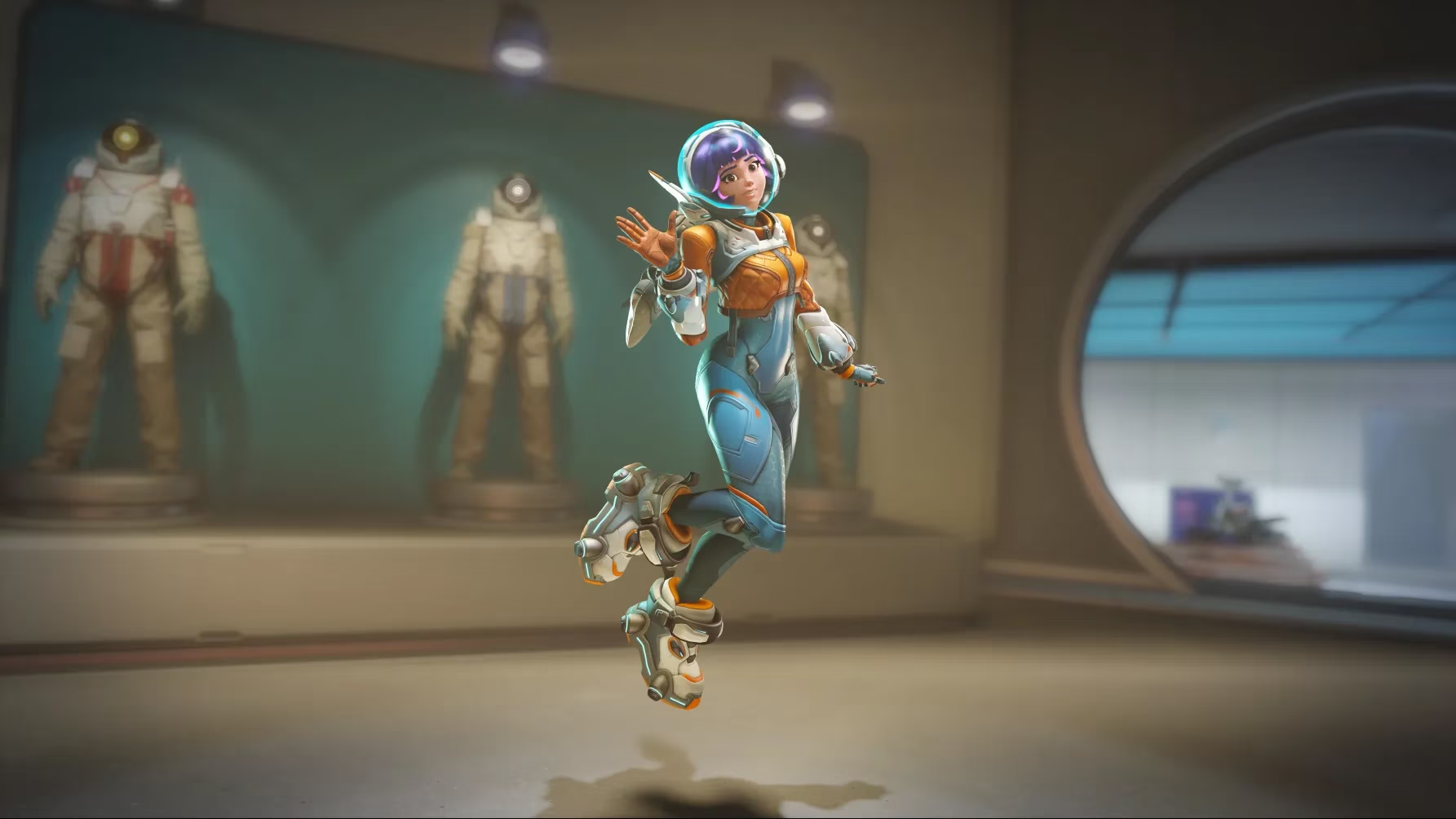
Hyper Ring is the ability most directly comparable to Lucio's speed aura, but it is more temporary and instanced. A large ring appears, and passing through it grants a burst of speed. It does not replace Lucio's constant tempo; it trades it for tactical bursts that can be more surprising. I like using it to rush my team through a choke or retreat before an ultimate.
| Ability focus | Lucio | Juno |
|---|---|---|
| Healing delivery | Passive aura around teammates | Burst-fire Mediblaster requiring aim |
| Speed utility | Continuous crossfade aura | Temporary Hyper Ring bursts |
| Movement | Wall-riding and speed boost | Glide Boost vertical jump |
| Ultimate | Sound Barrier shields | Orbital Ray damages enemies and buffs allies |
🛰️ Orbital Ray: An Ultimate That Feels Like Support Artillery
Finally, Juno's ultimate, Orbital Ray, calls a giant beam from space that buffs allies and damages enemies. It is not a team-wipe button, but it encourages allies to push into a contested point because they know support is pouring down on them. I imagine it like a lighthouse beam cutting through fog: it does not sink the enemy fleet by itself, but it tells every friendly ship exactly where to sail.
After two years, Juno has not completely yeeted Lucio out of my rotation, but she has become my default answer when I want speed without obligation. My personality fits support heroes like this, and Juno remains a reminder of why Overwatch 2 can be charming, frustrating, and beautiful all at once.
According to coverage from Rock Paper Shotgun, the most compelling support heroes in modern shooters tend to reward proactive decision-making—mobility, timing windows, and risk-managed aggression—rather than purely passive throughput, which maps neatly onto why Juno’s kit feels like a “Lucio-adjacent evolution” in your write-up. Framed through that lens, Juno’s aimed Mediblaster and bursty Hyper Ring encourage intentional micro-plays (peek, tag, reposition, re-engage) that can create the same tempo-control fantasy as Lucio, but with clearer personal agency: you’re not just sustaining a teamfight, you’re actively steering it with positioning, target selection, and short, high-impact utility cycles.
Comments