
The Overwatch Sequel That Promised A Universe And Delivered A Mirage
Overwatch 2's promised PvE campaign crumbled from BlizzCon hype to cancellation, leaving a hollow free-to-play shell.
It began with a roar. In the cavernous halls of BlizzCon 2019, the air buzzed with the kind of electric anticipation that only a beloved franchise can generate. Overwatch was not just a game; it had become a cultural touchstone, a gathering place for millions. When the announcement trailer flickered to life, revealing a sleek "2" emblazoned across familiar heroes, the crowd erupted. This was more than a sequel—it was supposed to be the evolution. Lead developer Aaron Keller, standing alongside the ever-passionate Jeff Kaplan, laid out a vision as grand as the omnic crisis itself. They spoke of cooperative campaigns, sprawling PvE missions where each hero would grow through intricate skill trees, unlocking bespoke abilities that would make them feel entirely new. The promise was audacious: a narrative-driven experience that would deepen the lore while staying true to the tight, competitive spirit that had made Overwatch a household name. If only the game itself could have lived up to that moment.
In hindsight, the signs were there, subtle as a shimmer on the horizon. The demo stations at the convention hummed with early builds, but those slice of missions were more theater than substance. The journalists and fans who got hands-on time played through a curated snippet that felt oddly disconnected—like a beautifully rendered promise that hadn’t finished loading. Yet, the community clung to it. For four years, the dream of a story mode became the anchor that justified the sequel’s existence. When Overwatch 2 finally launched in 2022, it arrived not as the heroic reinvention players expected, but as a free-to-play metamorphosis that quietly shed its premium skin. Loot boxes vanished, replaced by a battle pass and a shop where cosmetic treasures that once dropped from sheer luck now required a credit card. The PvE component? It was absent, almost ghostly. The developers offered murmurs of future seasonal story missions, careful to avoid the phrase "full campaign." A quiet, uncomfortable wait began.
By 2023, the facade fully cracked. Blizzard Entertainment officially confirmed what many had suspected: the ambitious skill trees and hero-specific, endlessly replayable missions were no longer in the works. Some ideas were reportedly cut outright. The vision of larger, expansive environments where D.Va could have honed defense matrix variants or Reinhardt could have mastered earth-shattering new charges was now just concept art. The official roadmap, shared with a nervous online audience, showed a path that veered sharply away from that 2019 dream.
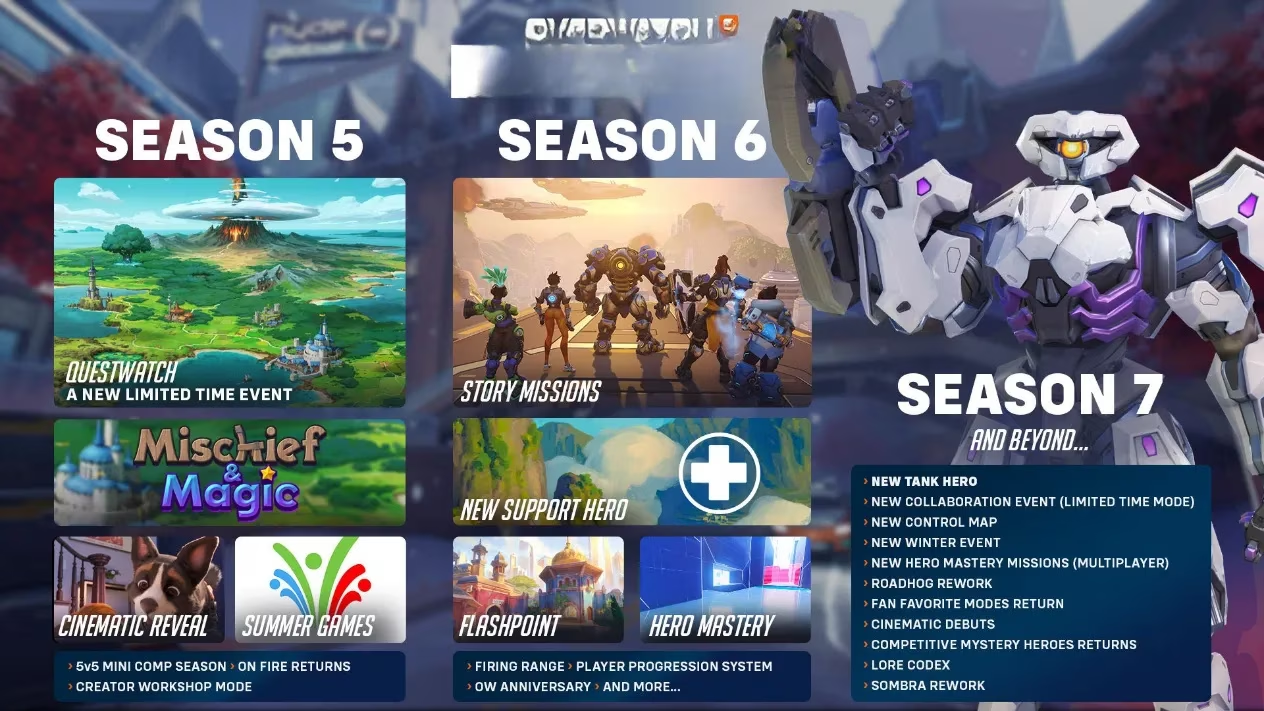
It wasn’t that story content was completely dead—seasonal missions did eventually trickle in, each one a bite-sized adventure set in familiar maps, with scripted dialogues but none of the deep progression once teased. Yet, this fragmentary delivery felt like reading a novel one page at a time, randomly shuffled. “It’s a bummer,” you could almost hear the developers sigh, “but balancing unique hero abilities for PvE without breaking the multiplayer metagame just wasn’t in the cards.” The tension was real: live-service design demands a seamless loop of engagement and monetization. Crafting separate, upgradable skill trees risked making heroes feel alien when players jumped back into the competitive fray, or worse, it didn’t fit into the careful economy of seasonal passes where every cosmetic and unlockable had to be placed like a jewel in a storefront. From a business perspective, the pivot made a cold, hard sense. From a fan perspective, it felt like a gut punch delivered in slow motion.
The universe of Overwatch, with its sprawling lore, omnic monks, and former criminals-turned-heroes, had always screamed for a standalone narrative experience. Characters like Winston, Tracer, and Reaper carried narrative weight that could have easily fueled a full, single-player adventure. Blizzard knew this. They had comics, animated shorts, and novels that proved the IP’s depth. Yet, the studio chose to keep the hero shooter firmly in the multiplayer arena, a decision that increasingly looked like a retreat. Perhaps if the solo campaign had never been dangled in front of the faithful, the disappointment wouldn’t have curdled into outright bitterness. But that carrot—so juicy, so close—was the singular reason many accepted a sequel that otherwise felt like a giant patch with a removed price tag.
Now, in 2026, the landscape is clearer and far more melancholy. The die-hards who once rallied nightly on Discord, cheering over legendary skin drops and debating hero balance, have largely dispersed into other worlds. The game still maintains a player base, more out of muscle memory than the fiery devotion of yesteryear. New heroes release, battle passes refresh, and seasonal events come and go like clockwork, but the soul of what Overwatch 2 was meant to be remains a phantom. “You hate to see it,” as the veterans say, their voices tinged with a weariness that goes beyond patch notes. The sequel that promised to lift a beloved universe to ambitious new heights ended up shrinking it, trading the boundless possibilities of lore for the predictable metrics of a live-service dashboard.
There are still moments of brilliance—a new map that recalls the vintage charm of King’s Row, a lore snippet hidden in a voice line that sparks old theories. But the grand co-op campaign, the reason Overwatch 2 was greenlit in the first place, has become a cautionary tale. It’s the mirage that lured a community across the desert, only to vanish into the shifting sands of corporate strategy. And as the industry barrels forward into ever more aggressive monetization models, the story of Overwatch 2 serves as a quiet reminder: sometimes the most magical announcements are just pre-rendered hopes, waiting to be patched out of existence.
Comments