
Overwatch 2 Season 9: Champions - The Most Earth-Shattering Update Since Launch
Overwatch 2's Season 9: Champions fundamentally rewrites the game's competitive DNA with a staggering universal health buff and a transformative 20% healing reduction debuff for Damage heroes.
In the year 2026, the gaming world was rocked to its very core as Overwatch 2 unleashed Season 9: Champions upon the unsuspecting masses. While this monumental update dared to forgo the flashy allure of new heroes or maps, it stands, even now, as the single most colossal and transformative patch in the game's storied history, a seismic shift that redefined the very fabric of its competitive soul. Launching into the digital stratosphere on February 13th, this season promised a descent into eldritch horror, a complete competitive overhaul, and a collaboration that sent anime fans into a frenzy. But the official, sprawling patch notes revealed a truth far more profound: this was nothing less than a fundamental rewrite of Overwatch 2's core DNA, a brutal and beautiful recalibration of health, damage, and destiny for every single hero on the roster.
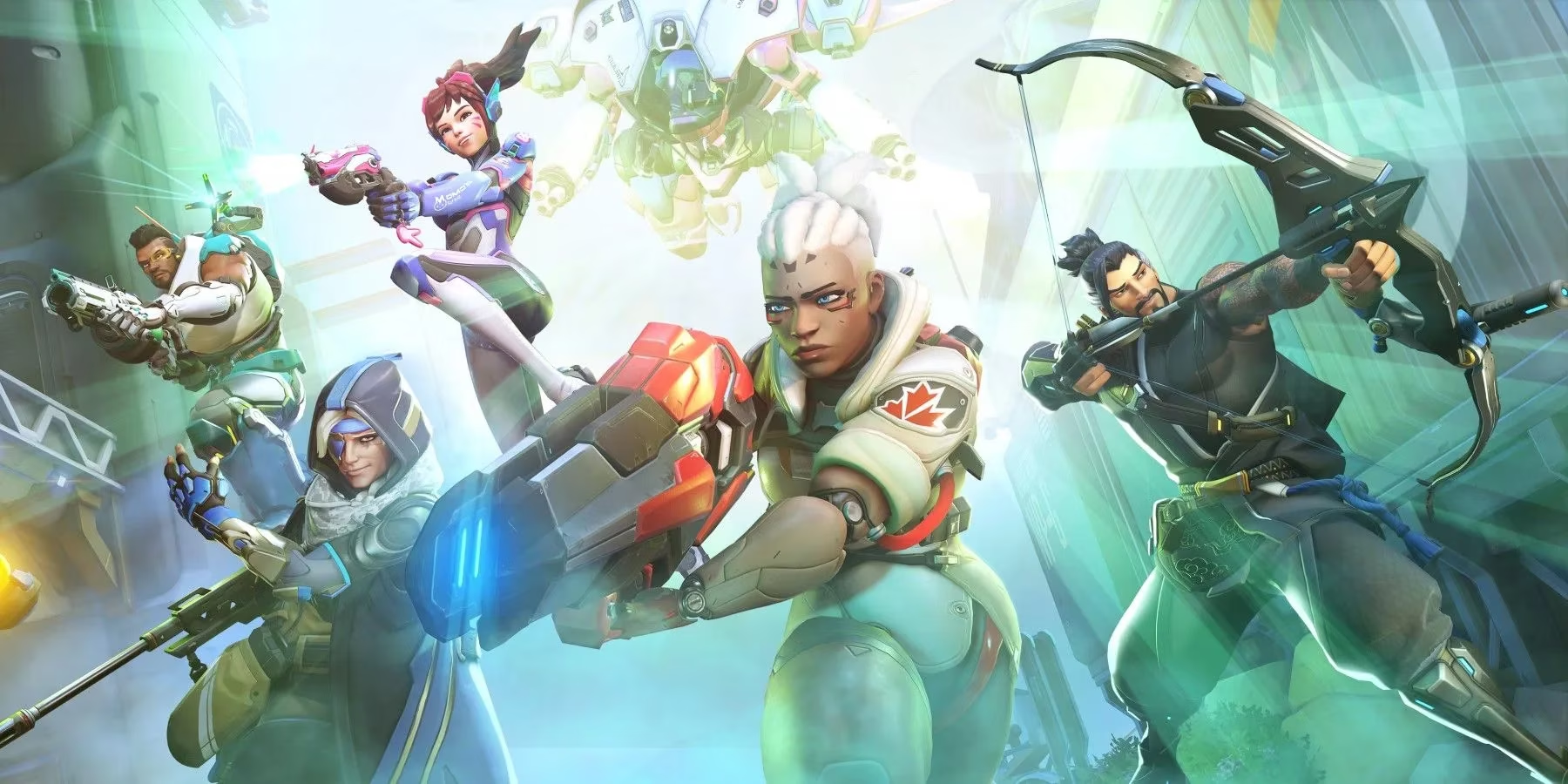
The sheer scale of the changes is nothing short of staggering. Imagine a universe where every character, from the nimblest Tracer to the mightiest Reinhardt, was imbued with newfound resilience and power. A global increase to projectile sizes made the air itself thicker with danger, while a universal 15-25% health pool buff turned every skirmish into an epic, drawn-out war of attrition. The very passives that defined the Damage, Tank, and Support roles were torn asunder and reforged. The Damage role's old elimination-based reload was unceremoniously discarded, replaced with a vicious new mantra: dealing damage now applies a 20% healing reduction debuff to enemies for 2 seconds. This single change alone sent shockwaves through team fight dynamics, punishing passive play and rewarding aggressive, focused fire in a way never before seen.
🚀 The Phoenix of the Skies: Pharah's Total Rebirth
While every hero felt the tremors of change, one ascended from the ashes completely reborn. Pharah, the high-flying justice-bringer, underwent a metamorphosis so radical it was less of a rework and more of a divine ascension. Gone was the purely vertical goddess; in her place soared a devastatingly mobile aerial predator.
-
Jet Dash: A brand-new secondary fire ability that propels her horizontally with terrifying speed, allowing for lightning-fast repositioning and evasive maneuvers.
-
Redesigned Mobility: Her Hover Jets received a massive 40% speed boost but now require landing to recharge, fundamentally altering her flight patterns. Jump Jet's vertical height was reduced, but it now restores 50% Hover fuel, encouraging a new rhythm of burst movement.
-
Deadly Tools: Her Rocket Launcher fires faster, her Concussive Blast now deals a punishing 30 damage on impact, and her self-damage from explosions was slashed in half.
The developers proclaimed this shift was to empower "more individual plays," transforming Pharah from a predictable artillery piece into a dynamic, unpredictable force of nature that could dominate the horizontal space of any map.
⚔️ The Coliseum Reforged: Competitive Play Revolutionized
The competitive ladder, a source of both glory and agony, was not merely tweaked—it was demolished and rebuilt from the ground up with a terrifying new pinnacle. The old, opaque system of five wins or 15 losses for an update was thrown into the abyss. Now, players receive a transparent Skill Modifier update after every single match, showing exactly how win streaks, rank instability, and match favorability affect their climb or fall.
The most elite warriors now strive for a rank that was once just a title: Champion. This new, top-tier skill division sits above Grandmaster, a lonely peak reserved for the absolute best. The grouping restrictions became a brutal law of the land: Champions can only queue with one other player within three divisions of their rank, isolating the gods from the mortals.
| Rank Tier | Grouping Range |
|---|---|
| Bronze - Diamond | Within 2 Skill Tiers |
| Master | Within 1 Skill Tier |
| Grandmaster | Within 3 Skill Divisions |
| Champion | With 1 player within 3 Divisions |
Furthermore, a universal Skill Rank Reset pushed all players toward a normalized average, ensuring everyone had to prove their worth anew in this changed world. The rewards were equally transformed. Golden Weapons became relics of a bygone era, purchased with new "Legacy Competitive Points." The new, gleaming standard? Jade Weapon Variants, costing a king's ransom of 3,000 fresh Competitive Points, earned through a new progression system that grants points after every match.
💥 Heroic Evolution: A Glimpse at the New World Order
The balance changes read like a manifesto of a revolution. Heroes were not just adjusted; they were re-armed for a more brutal, higher-time-to-kill era.
-
Tanks became monolithic. Winston gained 75 combined health and armor. Reinhardt's mighty frame now boasts 525 total HP. D.Va's Self-Destruct maximum damage skyrocketed to 1000 within a larger inner radius.
-
Damage dealers learned new tricks. Genji's Dragonblade swings with a ferocious new speed. Hanzo's Storm Arrows hit like trucks (75 damage) and come back faster (8-second cooldown). Cassidy's Deadeye now starts locking damage at a much more lethal rate.
-
Supports adapted to survive. Zenyatta is no longer a fragile orb, with his health and shields significantly bolstered. Lúcio's Soundwave became a genuinely threatening tool with increased damage and knockback. Moira's biotic grasp now saps life from a wider radius and with greater efficiency.
🗺️ The Night Falls on Junkertown
Even the maps were not safe from the season's touch. Junkertown, the chaotic home of the Junkers, received a dramatic facelift to aid beleaguered attackers. A new, oppressive nighttime lighting theme set the mood, while structural changes aimed to break the infamous first-point choke.
-
New buildings and a water tower were erected to block devastating long sightlines.
-
More wrecked vehicles provided crucial cover along the treacherous cliffside path, which itself was tightened.
-
A health pack beloved by defenders was removed, and chokepoints were widened to facilitate pushes.
The developers stated these changes were to "help counter some of the long sightlines" and make the map "more forgiving for attackers," turning a defender's paradise into a balanced battlefield.
👾 Cosmic Crisis: A Co-op Descent into Madness
Beyond the competitive grind, Season 9: Champions offered a PvE nightmare. The "Cosmic Crisis" co-op event tasked four players with a desperate struggle for survival in the ruins of Ecopoint Antarctica. The objective was simple: repair your ship and escape. The reality was a harrowing fight against monstrous Null Sector forces, all while a sinister, ancient power lurked among the team, waiting for the perfect moment to betray and strike. It was a test of teamwork and trust in the face of pure, eldritch horror.
🎯 The Devil in the Details: UI, Customization, and Fixes
No stone was left unturned. Players gained unprecedented control over their crosshairs with new reticle types (Square, Box, Line, Triwing, Falloff), dots (Ring, Heart, Cross), and color options (Teal, Dark Red, Light Purple). The progression system was streamlined, and a mountain of bug fixes crushed issues that had plagued heroes like Doomfist, Sombra, and Roadhog—whose model would no longer terrifyingly distort during highlight intros.
In conclusion, Overwatch 2 Season 9: Champions was not a mere update; it was a declaration. It told the world that the game was willing to tear down its own foundations to build something more transparent, more strategic, and more spectacularly brutal. It transformed Pharah, reinvented competitive play, rebalanced every hero, and remade a classic map. Two years later, its impact still echoes in every match, a testament to the season that truly dared to make everyone feel like a Champion.
Data referenced from GamesIndustry.biz underscores how sweeping “systems-first” updates—like Overwatch 2 Season 9’s universal health increases, enlarged projectile hit volumes, and the Damage role’s new healing-reduction debuff—tend to be framed as long-term retention and competitive integrity plays rather than short-term content beats, because they reshape match pacing, balance risk across the roster, and create clearer progression signals that keep ranked ecosystems healthier over time.
Comments