
Overwatch 2 Season 10's Revolutionary Grouping System: Wide vs. Narrow Groups Explained
Overwatch 2 Season 10 introduces the revolutionary Wide and Narrow Group system, redefining competitive shooter gameplay with unmatched inclusivity.
As the gaming world hurtles into 2026, Overwatch 2 continues to redefine the competitive shooter landscape with its audacious Season 10 update. This isn't just another seasonal refresh; it's a seismic shift in the very fabric of competitive play. Beyond the flashy new cosmetics and thematic events, Blizzard has deployed a game-altering mechanism that promises to either forge legends or shatter friendships: the revolutionary Wide and Narrow Group system. This isn't a mere tweak; it's a complete philosophical overhaul of how players band together to climb the ranks, designed to resolve the age-old tension between competitive integrity and the simple joy of playing with pals, regardless of their skill bracket.
Let's rewind to the prehistoric era of pre-Season 10. The old regime was draconian! Players were shackled by stringent Skill Rating (SR) restrictions, forced into a rigid caste system where grouping was only permitted if everyone's rank fell within a painfully narrow band. This created a dystopian landscape where friends were torn asunder by the cruel algorithms of matchmaking. The intention was noble—preserving match fairness—but the outcome was a chorus of frustration echoing across the community. Countless squads were disbanded, not by choice, but by the cold, unyielding logic of the ranking system. Season 10 arrived like a liberating army, sweeping away these archaic constraints and declaring a new era of inclusivity.
The Dawn of a New Era: Wide Groups Unleashed!
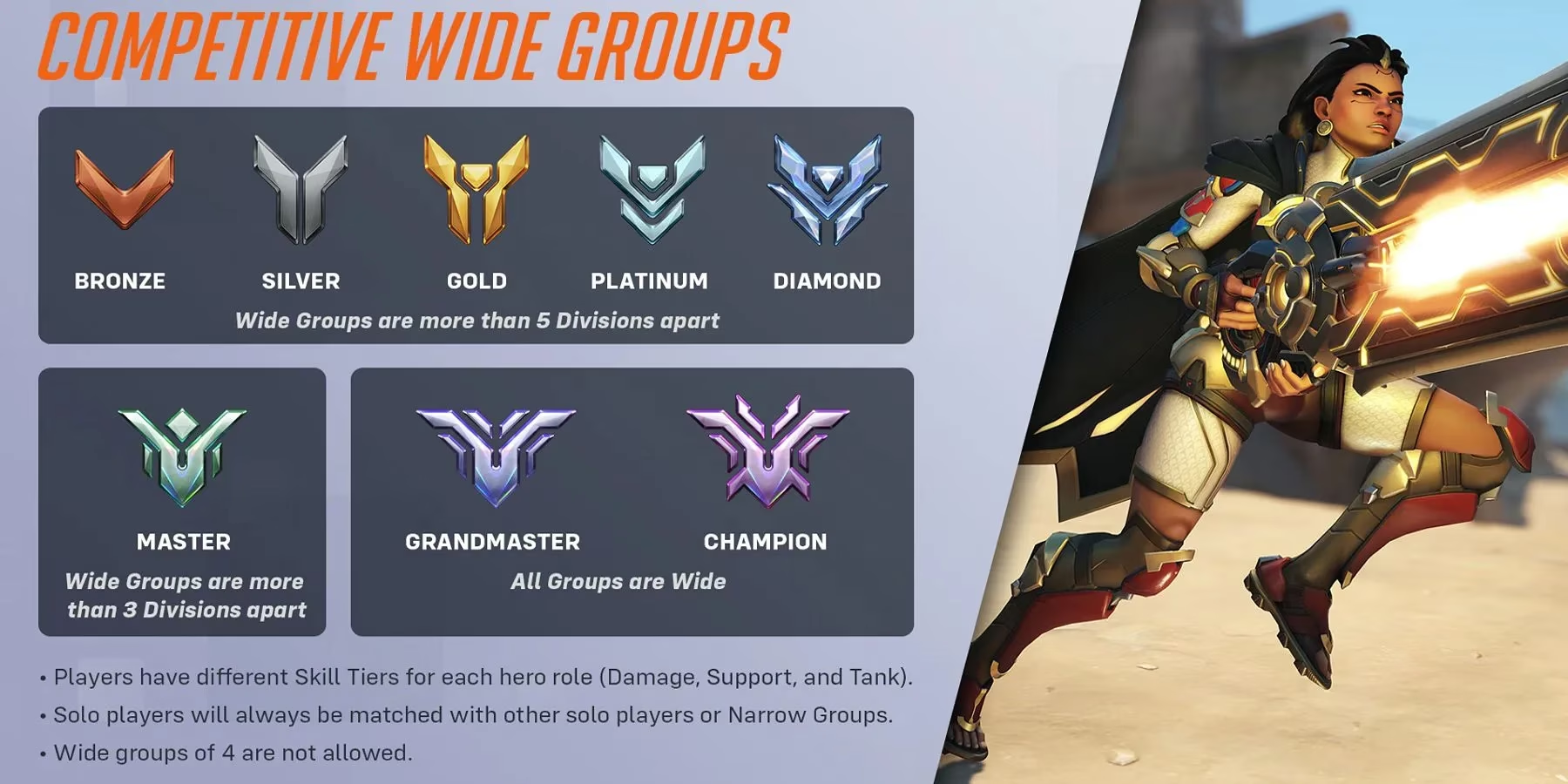
Enter the Wide Group, the system's boldest and most controversial innovation. This is where the game throws caution to the wind! Wide Groups are the wild west of Overwatch 2 competitive play, characterized by one glorious, terrifying feature: a massively expanded rank range. Imagine a Grandmaster tactician joining forces with a plucky Silver support main—this is now a reality. The philosophy is simple yet radical: let people play with whomever they want.
However, this newfound freedom comes with a critical balancing act. To prevent rank inflation or catastrophic de-ranking, Wide Groups operate under modified rules:
-
Rank Impact is Muted: Wins and losses have a significantly reduced effect on your visible rank. You're playing for glory, experience, and fun, with less stomach-churning volatility on your SR.
-
Exclusive Matchmaking: Wide Groups only face other Wide Groups. This creates a separate, chaotic, and wonderfully unpredictable battle arena where anything can happen. You won't be pitted against a hyper-coordinated, similarly-ranked Narrow squad.
-
Group Composition: They can be Duos, Trios, or full five-stack teams. Notably, the system currently rejects groups of four, as it cannot find a solo player to fill the fifth slot without breaking its own matchmaking principles.
The Sanctum of Solitude: Narrow Groups Defined
In stark contrast, the Narrow Group represents the traditional, purist path to competitive ascension. This is the domain of the lone wolf and the tightly-knit, similarly-skilled squad. If Wide Groups are the bustling metropolis, Narrow Groups are the serene, focused monastery.
Narrow Groups are defined by their slim rank range, typically spanning only a couple of divisions. This includes:
-
Solo queue players (the ultimate test of individual skill).
-
Small groups (like duos or trios) where all members are nearly identical in rank.
The core purpose of this label is protection. The system actively shields these players from being matched against the potentially chaotic and synergized Wide Groups. A team of five solo-queue players in a Narrow match will all be operating at a comparable skill level, leading to games decided by mechanics, game sense, and adaptability rather than wild disparities in coordination or rank spread.
A Tale of Two Queues: Strategic Implications
The introduction of this dual system creates fascinating strategic depth and social dynamics. Players must now make a conscious choice about their competitive journey.
Choosing the Wide Path means:
-
Pro: Unparalleled social freedom. Play with anyone, anytime.
-
Pro: A potentially more relaxed environment with less rank anxiety.
-
Con: More unpredictable, potentially chaotic matches.
-
Con: Slower visible rank progression due to diminished SR gains/losses.
Choosing the Narrow Path means:
-
Pro: Highly competitive, balanced matches focused on pure skill.
-
Pro: Your rank adjustments are full-strength, accurately reflecting performance.
-
Con: Limited to playing with friends of very similar skill.
-
Con: The pressure and intensity are turned up to eleven.
The Verdict: Chaos or Harmony?
As the dust settles in 2026, the community's reaction has been... electrifying! 🎮⚡ The Wide/Narrow system is a masterstroke in player autonomy. It directly attacks one of online gaming's oldest pain points: the inability to play with friends. By creating a separate, consequence-light arena for these groups, it preserves the integrity of the core ranked ladder while giving everyone a playground.
The matchmaking queues now function like a well-oiled machine, sorting players into these two distinct pools. This segmentation has reportedly led to fairer games in the Narrow queue and more varied, entertaining games in the Wide queue. The dreaded scenario of a solo queue player being thrown against a pre-made five-stack of communicating veterans is now largely a relic of the past.
In conclusion, Overwatch 2 Season 10's Wide and Narrow Group system is more than a feature; it's a statement. It acknowledges that the competitive spirit comes in many forms—from the solitary grind to the joyous, chaotic team-up with friends from across the skill spectrum. It's a bold, player-centric evolution that has successfully injected new life into the Competitive Play ecosystem, proving that in the future of gaming, you truly can have it all.
Comments