
Overwatch 2's New Era: Hard Light Weapon Skins Illuminate a Cosmetic Frontier
Overwatch 2 weapon skins and dedicated weapon cosmetics redefine player expression, offering dazzling customization beyond hero skins.
In the luminous forge of live service evolution, Overwatch 2 has struck a new chord, one that resonates with the very tools of battle. For seven years, heroes and their armaments were bound in an unbreakable visual pact; a hero’s skin was their weapon’s destiny. Yet, as the clock ticks toward 2026 and the dawn of Season 8: Call of the Hunt, the game’s developers have unveiled a long-awaited innovation: dedicated weapon skins. These are not mere extensions of a hero’s attire but distinct entities, shimmering with their own identity. The first to emerge from this creative forge are the ethereal Hard Light weapon skins for Reinhardt, Reaper, and Mercy—a trio of designs that feel less like forged steel and more like crystallized moonlight given lethal form. This move decouples the aesthetic fate of a weapon from its wielder, opening a cosmos of personalized combinations where a hero’s past and future armaments can now clash and harmonize in unexpected ways.
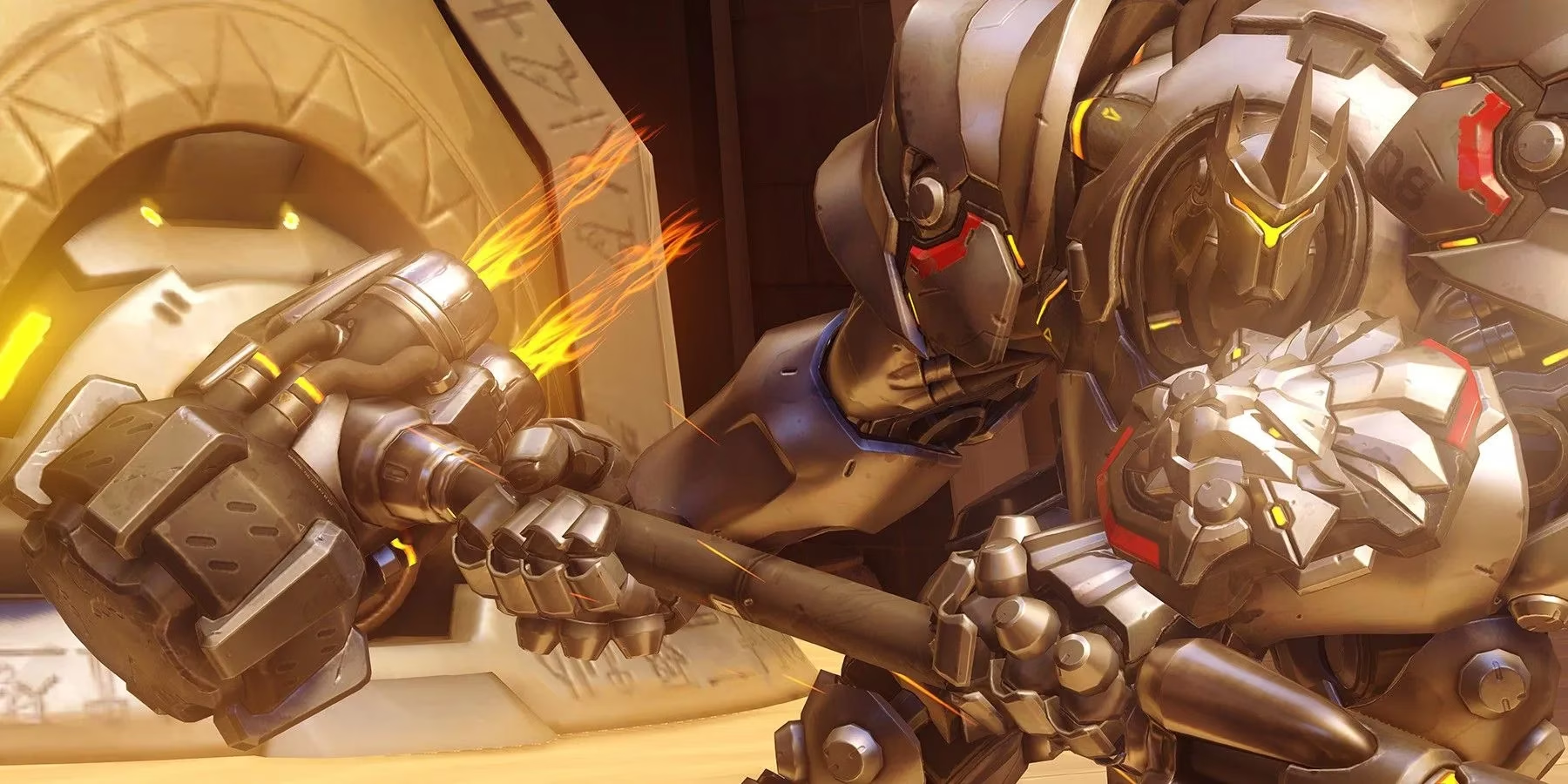
The introduction of these standalone cosmetics marks a pivotal shift in Overwatch 2’s philosophy. Historically, the golden weapon skins, earned through Competitive Points, stood as the solitary exception to the rule of unified hero-and-weapon design. Now, the Hard Light collection—with its sleek white chassis, holographic blue accents, and subtle golden filigree—paves a new path. Its aesthetic is intriguingly reminiscent of Echo’s base design, suggesting a shared technological origin or perhaps a visual language borrowed from the game’s more advanced synthetics. While these initial skins are slated for the in-game shop (their price a mystery yet to be solved), their arrival hints at a future where the arsenal of every hero might be subject to such transformative customization. Imagine a world where Soldier: 76’s pulse rifle could shimmer with the frost of a Winter Wonderland or blaze with the fury of a dragon, independent of the soldier who carries it.
The Art of Fragmentation and Fusion
The true magic of this new system lies in its potential for alchemical combination. Players can now mix and match these prismatic weapons with any existing skin for Reaper, Reinhardt, and Mercy. Picture the haunting visage of Reaper’s Nevermore skin, its dark feathers and bone mask, now gripping twin shotguns that glow with the pure, hard light of a distant star—a juxtaposition as jarring and beautiful as a thunderstorm in a glass cathedral. The possibilities invite a new layer of player expression, turning each hero into a canvas where disparate artistic eras can converse.
However, this innovation also raises poetic questions:
-
Will heroes receive matching Hard Light skins? Doing so might render the standalone weapon skins redundant, like gifting a key to a door already swung wide open.
-
How will this system adapt to unique heroes? For champions like Lifeweaver and Moira, whose weapons are biological extensions—a blossoming hand, a swirling vortex of energy from the fingertips—applying a ‘skin’ is a different challenge. Will Blizzard treat these as graceful, bioluminescent grafts, or will they remain untouched, sacred to their original form?
A Glimpse into the Cosmetic Horizon
Season 8 itself is a tapestry of returning traditions and fresh hunts. Alongside the debut of the new Tank Mauga, players will experience:
-
The chaotic Battle of the Beasts limited-time event.
-
The cozy, festive return of Winter Wonderland.
-
The vibrant celebrations of the Year of the Dragon.
Yet, amidst these events, the weapon skins stand apart—a quiet revolution. Their absence from the Season 8 battle pass suggests Blizzard is testing the waters, gauging the community’s thirst for this new tier of customization. If successful, future seasons may weave these skins into battle pass rewards or event challenges, offering them as milestones on a player’s journey. For now, the initial set exists as a premium offering, a first brushstroke on a vast, blank canvas.
The implications are profound. This could be the genesis of a system where weapon skins tell their own stories—relics from lost missions, gifts from allied factions, or corrupted versions touched by null-sector code. They become more than accessories; they are silent narrators slung over a hero’s shoulder. As 2026 approaches, Overwatch 2 continues its metamorphosis, proving that even in a world of constant conflict, there is always room for a new kind of beauty—one that shines not from the hero, but from the tool in their hand, as unexpected and precise as a sonnet etched onto a bullet.
Comments