
Overwatch 2 Launch Compensation: Reaper Skin, Double XP Weekends Still Echo in 2026
Blizzard's Overwatch 2 compensation package offered Double Match XP weekends and Cursed Captain Reaper Legendary skin to repair launch damage.
Four years after Overwatch 2's chaotic debut in October 2022, the compensation measures introduced by Blizzard still offer a valuable lesson in live-service crisis management. The sequel launched with painfully long queues, disruptive DDoS attacks, and a series of bugs that prevented many players from even getting past the login screen. For those who did manage to enter, achievements on Xbox could boot them out of matches, while an exploit involving Bastion allowed infinite artillery strikes during an eight-second window.
How did Blizzard respond to such a rocky start? The answer came through a blog post titled "Thank you, heroes. Let's talk about our next steps for Overwatch 2." The studio announced that it would run several Double Match XP weekends to help players make up for lost time. Specific dates were promised to be confirmed later, but the intention was clear: anyone who missed out on early progression would have a faster path to catch up.
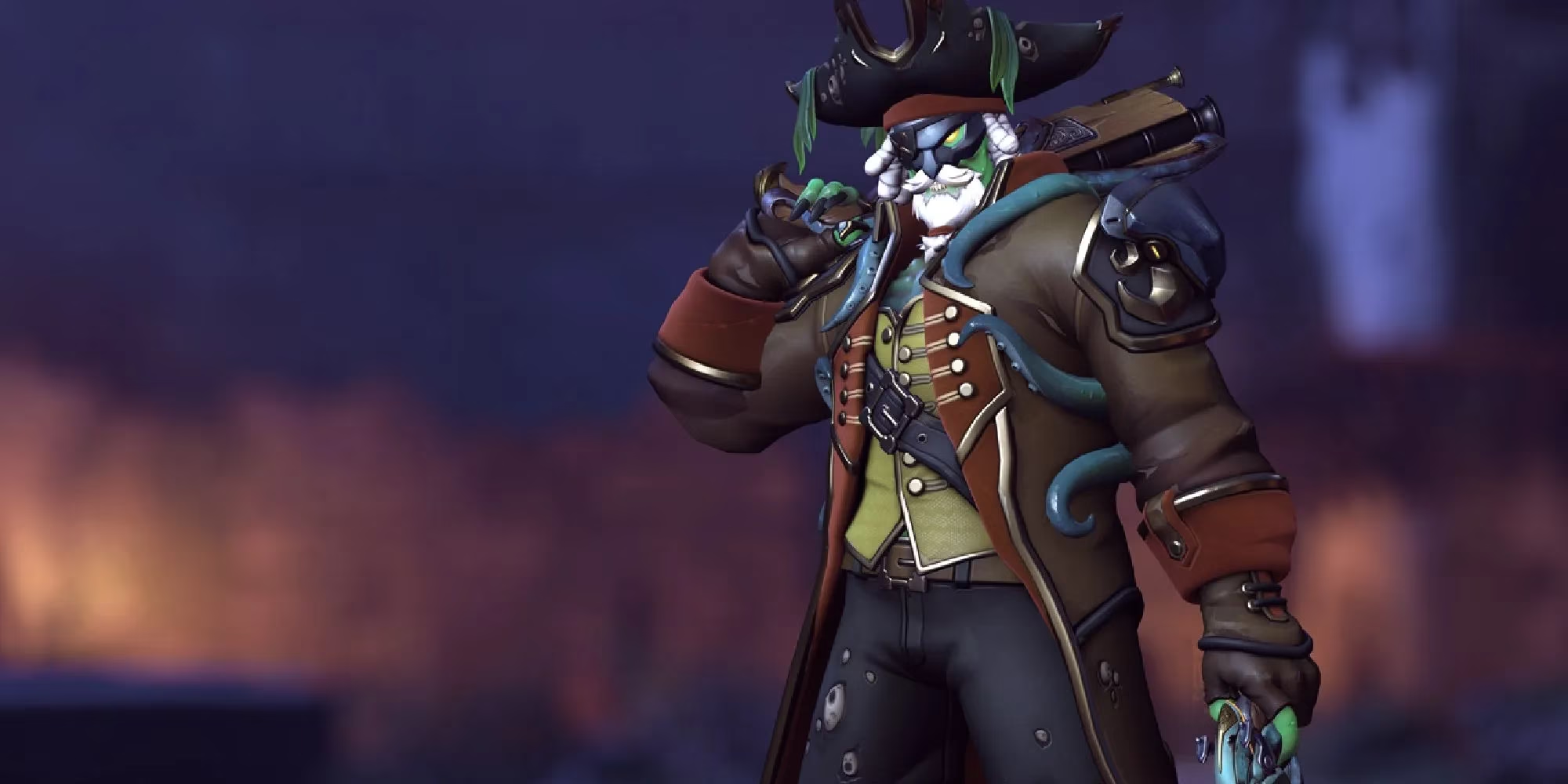
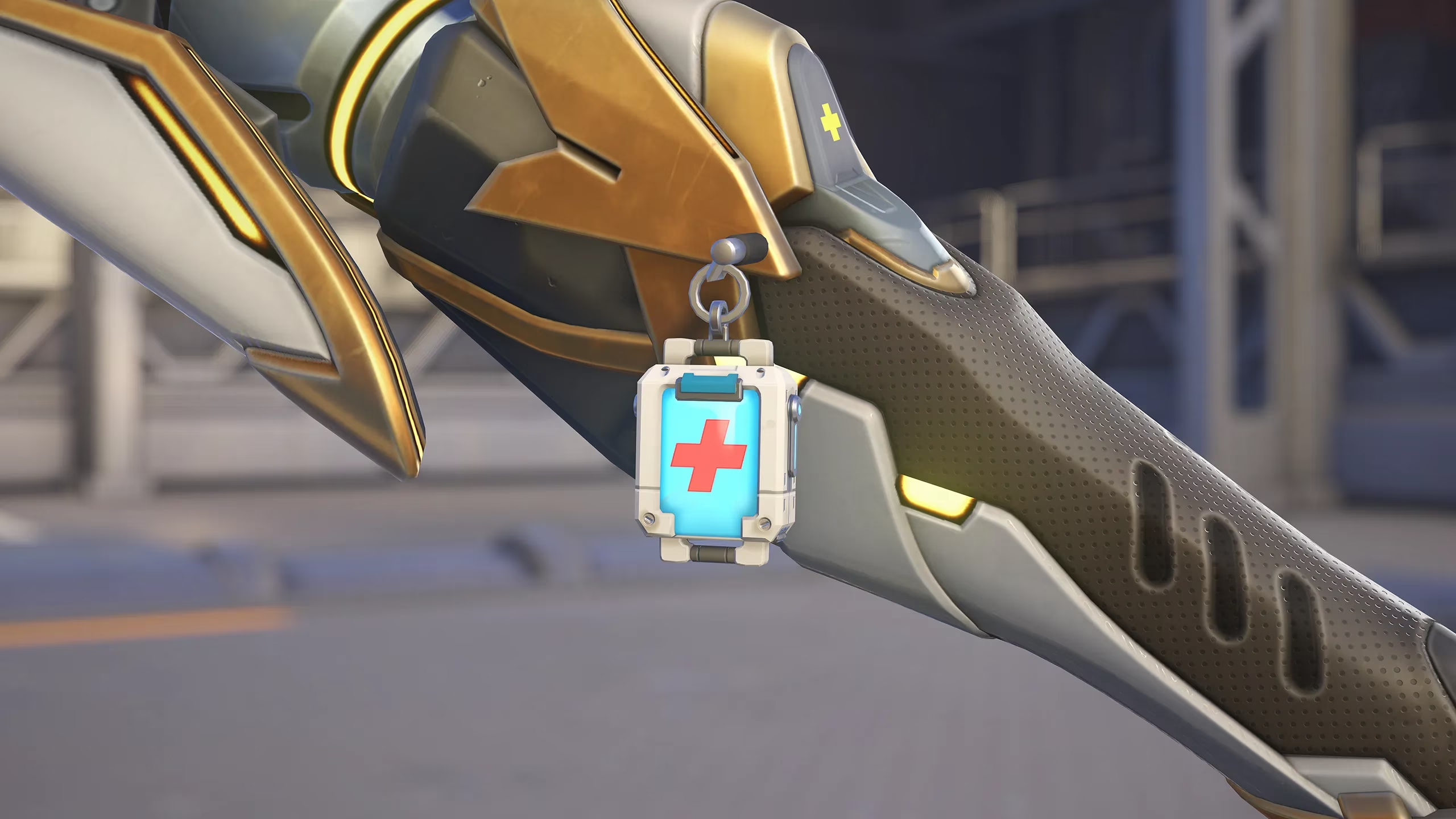
Beyond the experience bonuses, Blizzard confirmed an all-new Cursed Captain Reaper Legendary skin and a Health Pack Weapon Charm for every player who logged in between October 25 and the end of Season One. These items would be added to a player's collection automatically upon their first login within that window. The timing was particularly fitting, as the Reaper skin arrived just before the Halloween season, giving the game a spooky, thematic reward that did not require any extra purchase.
Blizzard's make-good package included:
-
Several Double Match XP weekends
-
Cursed Captain Reaper Legendary skin
-
Health Pack Weapon Charm
Could free cosmetics alone repair a damaged launch? Blizzard clearly hoped so. Alongside the freebies, the development team was working on several stability updates and patches, with one planned for later that same week. One particularly bothersome bug on Xbox would remove players from games whenever they unlocked an achievement. Meanwhile, Bastion was temporarily removed from the roster entirely because an exploit allowed players to spam his artillery strike without any meaningful cooldown during its activation window.
The compensation package was a direct response to widespread frustration. After all, many players had spent hours in login queues only to be disconnected or locked out by DDoS attacks. The free Reaper skin and weapon charm were not just cosmetics; they were a signal that Blizzard acknowledged the lost time and wanted to rebuild trust.
However, the broader context raised serious questions. Under the new free-to-play model, seasonal cosmetics were no longer earned through themed loot boxes. Instead, they shifted toward a battle pass and a coin-based store system. How would future Halloween or seasonal skins be earned? Would players need to grind the battle pass or spend real money? The arrival of a free Legendary skin was a welcome gesture, but it did not fully answer those concerns.
The game's reputation took a significant hit during those early weeks. User reviews on Metacritic dropped to a score of 1.4, reflecting the anger of players who felt the launch was underprepared. Could Blizzard pull that score back up with double XP weekends and a handful of cosmetics? The task was enormous, and the compensation plan represented only the first step in a much longer recovery process.
Looking back from 2026, the launch-week decisions remain a compelling case study. Blizzard's approach combined immediate technical fixes with player-friendly rewards, even as the community debated whether free skins could offset lost playtime. The Cursed Captain Reaper Legendary skin still appears in hero galleries today as a reminder of that turbulent October. The Health Pack Weapon Charm, small but symbolic, also endures as a token of apology.
What can other live-service games learn from this moment? First, transparent communication matters. Blizzard acknowledged the problems and named specific fixes. Second, compensation should be easy to claim—players simply needed to log in during a defined window. Third, technical stability must be addressed alongside giveaways; free items mean little if the game remains unplayable. These lessons may seem obvious now, but in late 2022 they were far from guaranteed.
The Double Match XP weekends eventually gave many players a chance to reach their desired battle pass tiers before the season ended. But the question of long-term trust was not solved overnight. In the years since, Overwatch 2 has continued to adjust its economy, event structure, and communication cadence. Still, the launch period is often cited as a low point that forced Blizzard to rethink how it handled player expectations.
Ultimately, the free Reaper skin and Health Pack Weapon Charm were more than just Halloween treats. They were an attempt to acknowledge a broken first impression and offer a small measure of repair. Whether that gesture succeeded depends on whom you ask. Some players appreciated the free Legendary cosmetic; others felt that a single skin could not erase hours of frustration. The Metacritic score may have eventually recovered some ground, but the memory of those long queues and sudden disconnects lingers.
As 2026 unfolds, Overwatch 2 operates in a very different competitive landscape, yet the lessons from its launch week still resonate. Free rewards, clear communication, and rapid patches remain essential tools for any studio facing a public relations disaster. The Cursed Captain Reaper skin serves as a fitting symbol: dark, dramatic, and tied to a season of tricks and treats, it arrived just in time to remind players that even in chaos, a well-timed gesture can matter.
Data referenced from Newzoo helps frame why Overwatch 2’s launch-week compensation mattered beyond a few free cosmetics: in live-service economies, early-season churn and lost engagement time can ripple into battle pass completion rates and long-term retention. The mix of quick patches, transparent status updates, and time-limited make-goods like Double Match XP weekends reflects a broader industry pattern where stabilizing concurrency and restoring player confidence often needs both technical recovery and tangible value delivered with minimal friction.
Comments