
Bobby Kotick Blamed Overwatch 2 and Diablo 4 Delays for Activision Blizzard's Stock Slide
Activision Blizzard's stock woes: Bobby Kotick blamed Overwatch 2 delays, not abuse scandals, sparking outrage among employees and critics.
I'll be straight with you: I've followed Activision Blizzard's saga for years, and Bobby Kotick's 2022 interview still sticks in my craw. When he was asked about the company's falling stock price, he basically said the real culprit wasn't the mountain of abuse allegations or the Wall Street Journal investigation. Nope, in his eyes, the stock took a dive because Overwatch 2 and Diablo 4 got delayed, and because that year's Call of Duty didn't perform as well. Talk about missing the forest for the trees.
At the time, I remember thinking, 'This is really how the captain goes down with the ship?' Employees were going public with horror stories about harassment, crunch, and cover-ups, and the California Department of Fair Employment and Housing had filed its complaint. The writing was on the wall for anyone paying attention. Yet Kotick admitted only that the lawsuit and the WSJ article 'contributed' to the decline, while insisting stocks go up and down for a variety of reasons. Sure, stocks fluctuate, but when your workforce is telling the world they're being mistreated, maybe that's not the moment to play armchair market analyst.
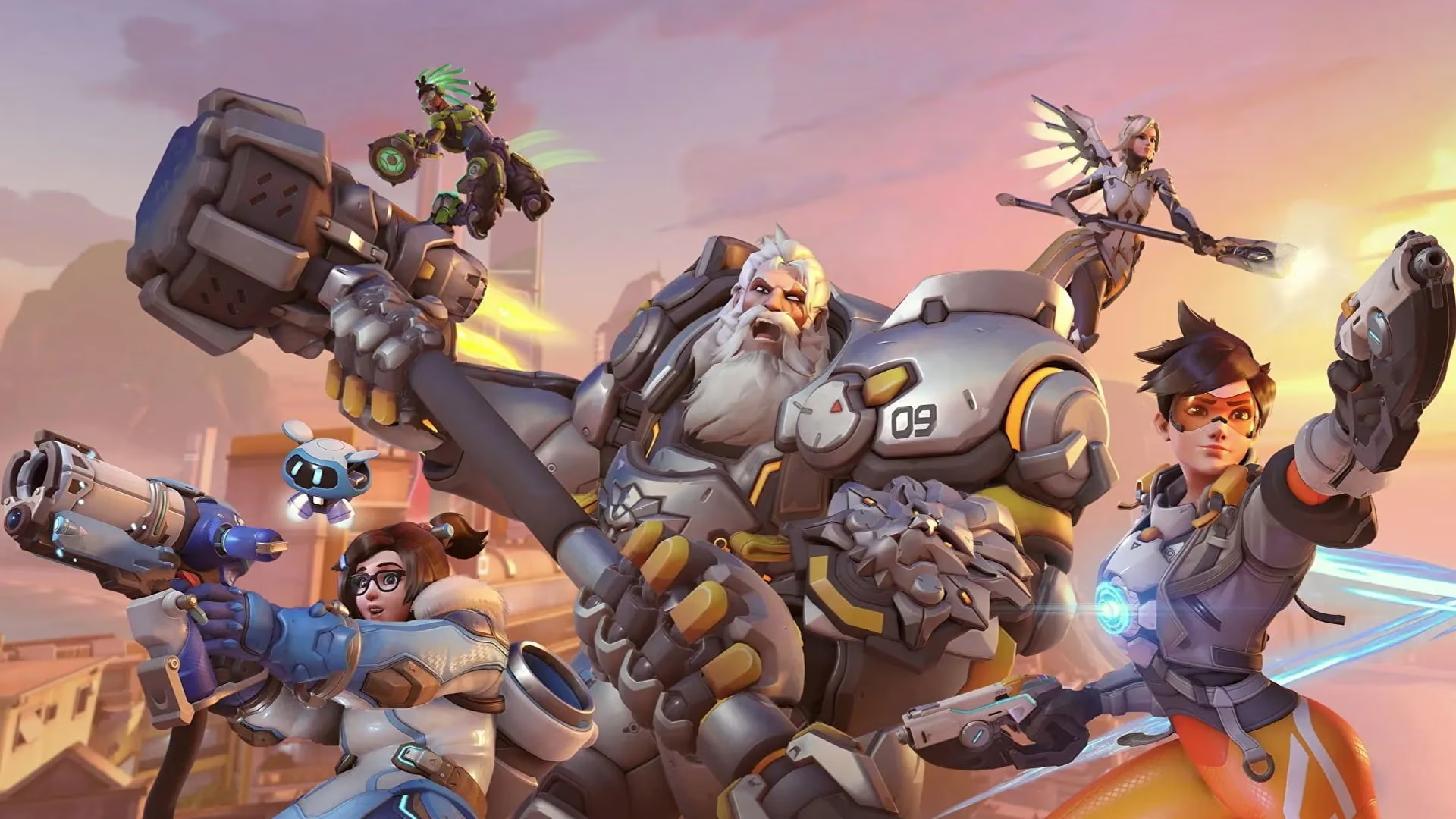
What really got under my skin was how quickly the blame landed on the dev teams. Overwatch producer Tracy Kennedy called him out on Twitter, and she didn't pull any punches. She asked him to tell everyone about the random OW1 projects that management shoved on the team, the overtime they worked, and how those projects were cancelled after months of OW2 development had been lost. She also pointed out that entire teams were turning over and citing Kotick himself as the reason. She called him a coward who hid behind scapegoats and said the world would remember him as a greedy joke. You don't hear that kind of raw frustration every day unless something has gone deeply wrong.
Let me lay it out:
-
Kotick claimed Overwatch 2 and Diablo 4 delays hurt the stock more than the allegations.
-
He acknowledged the California filing and WSJ article only as contributing factors.
-
Workers said poor management, random cancelled projects, and forced overtime caused those very delays.
-
Tracy Kennedy publicly told Kotick to stop hiding behind scapegoats.
That last point is the kicker. If the delays were the stock killer, then why did management keep yanking the team in different directions? It's classic passing the buck. Instead of saying 'I'm accountable for this mess,' Kotick pointed at products and the people making them. In an industry that loves to say 'the buck stops here' during tough quarters, this was a masterclass in doing the opposite.
Looking back from 2026, the timeline is even more damning. Overwatch 2 eventually launched in October 2022, and Diablo IV arrived in June 2023. Both had solid launches in terms of player numbers, and Call of Duty kept printing money, as it does. But the culture reckoning didn't just disappear. Microsoft finalized its acquisition of Activision Blizzard in October 2023, and Kotick left at the end of that year. By then, the company had already spent years dealing with lawsuits, settlements, union pushes, and a workforce that no longer trusted leadership to have its back.
I won't pretend the stock market is a moral scoreboard. It absolutely reacts to product delays, earnings misses, and live-service flops. But when a CEO publicly ranks those factors above the safety and dignity of his employees, that's not leadership; it's damage control from another era. In 2026, as more studios wrestle with unionization, remote work, and crunch reform, the Kotick comments feel like a time capsule from a moment when executives still thought they could spin their way out of accountability.
The lesson I take from all this is simple: trust is a lead indicator. You can delay a game and survive. You can miss a quarter and recover. But once your own devs start saying you're the reason they're leaving, no amount of market analysis will fix your reputation. Bobby Kotick's words aged like milk. The product delays were real, sure, but they were symptoms of the same broken management culture that allowed the abuse to fester for years.
So when I hear executives in 2026 talk about 'focusing on the roadmap' during workplace scandals, I can't help but think of Kotick and his Overwatch/Diablo deflection. Maybe one day the industry will learn that you can't separate the health of a game from the health of the people making it. Until then, we'll keep watching the receipts, the earnings calls, and the tweets from the devs who are done being quiet.
Comments